
ISO 13485 Medical Devices Quality Management System
In the highly regulated medical device industry, ensuring patient safety and product quality is critical. ISO 13485 is a globally recognized standard for Quality Management Systems (QMS) specifically designed for medical device manufacturers. It enables organizations to demonstrate their ability to consistently provide medical devices and related services that meet both customer expectations and regulatory requirements. Implementing this standard helps companies achieve the highest levels of product quality and safety, build trust with stakeholders, and facilitate market access on a global scale.
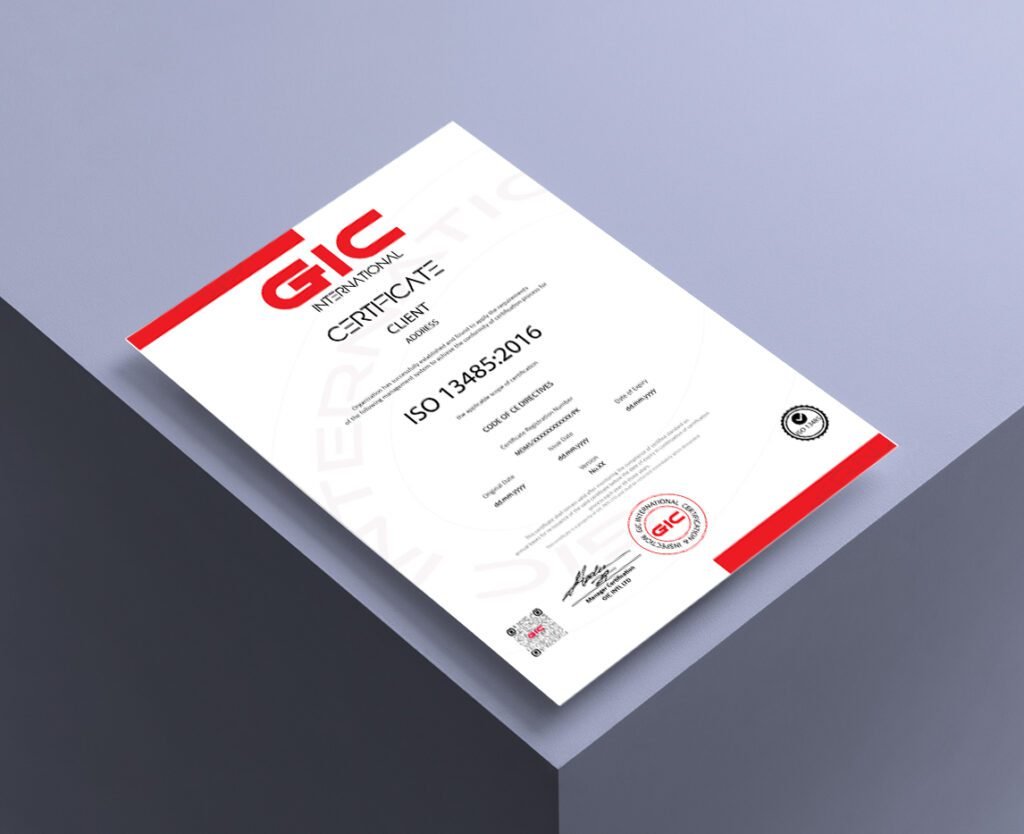
“Below, you’ll find more information about ISO 13485, a dedicated QMS standard for medical devices. To complete the certification process and achieve compliance, you can obtain ISO 13485 Certification through GIC International, helping your organization realize its quality and market goals. Contact us today.”
Understanding ISO 13485
ISO 13485 Certification provides a structured framework for organizations to establish and maintain a comprehensive Quality Management System (QMS) tailored to the medical device lifecycle. Developed by the International Organization for Standardization (ISO), the standard specifies requirements for a QMS that focuses on risk management, regulatory compliance, and consistent product quality. By implementing ISO 13485, companies can ensure their medical devices are safe, effective, and reliable throughout all stages—from design and production to installation and post-market surveillance.
As a standalone standard within the ISO family, ISO 13485 is specifically designed for the medical device sector. Its primary purpose is to harmonize regulatory requirements for quality management systems across the industry. By adopting this standard, organizations can streamline operations, meet strict global regulatory requirements, and demonstrate a strong commitment to product quality and patient safety.
Key Elements of ISO 13485
ISO 13485 Certification includes several key elements that organizations must address to implement an effective Quality Management System (QMS) for medical devices:
-
Quality Management System: Organizations are required to establish, document, implement, and maintain a QMS and ensure its continuous improvement in accordance with ISO 13485 requirements.
-
Management Responsibility: Top management must show commitment by establishing a quality policy, setting measurable quality objectives, conducting management reviews, and providing the necessary resources to support the QMS.
-
Resource Management: Organizations must identify and allocate sufficient resources, including qualified personnel, infrastructure, and a suitable work environment, to guarantee product conformity and regulatory compliance.
-
Product Realization: This element encompasses the entire medical device lifecycle, including planning, customer-related processes, design and development, purchasing, production, and service controls. Risk management is integrated throughout all activities to ensure product safety and effectiveness.
-
Measurement, Analysis, and Improvement: Organizations must monitor, measure, and analyze their processes and products. This includes managing customer feedback, controlling non-conforming products, implementing corrective and preventive actions (CAPA), and performing internal audits to ensure the QMS remains effective and compliant.
Benefits of ISO 13485 Certification
- Ensures Regulatory Compliance
- ISO 13485 Certification provides a structured framework to help organizations meet legal and regulatory requirements in major markets, including the EU, Canada, and other global regions. It also serves as a foundation for CE Marking under the MDR/IVDR and other international market approvals.
- Enhances Patient Safety and Product Quality
- The standard enables organizations to systematically manage risk throughout the medical device lifecycle. By ensuring consistent design, production, and quality control, ISO 13485 helps reduce product failures and recalls, safeguarding both patients and end-users.
- Improves Market Access and Competitive Advantage
- Achieving ISO 13485 Certification demonstrates a strong commitment to quality and compliance, recognized by regulators, suppliers, and healthcare providers. It is often a mandatory requirement for tenders and a prerequisite for becoming a trusted supplier to large corporations and global partners.
Challenges in Implementing ISO 13485
While ISO 13485 Certification offers numerous benefits, its implementation can be challenging for organizations. One of the main challenges is the extensive documentation and rigorous process control required. The standard mandates detailed records for every critical process, from design and development to production and delivery. To overcome this, organizations should implement robust document control systems and provide comprehensive staff training.
Another key challenge is the integration of risk management into all elements of the Quality Management System (QMS). Unlike general quality standards, ISO 13485 requires a proactive approach to identifying, assessing, and mitigating risks related to medical device safety and compliance. Organizations must cultivate a risk-aware culture and allocate skilled personnel and resources to manage these requirements effectively.
ISO 13485 and Risk Management
Risk management is a fundamental principle of ISO 13485 Certification. The standard requires organizations to adopt a risk-based approach in controlling their Quality Management System (QMS) processes, proactively identifying potential issues and implementing preventive controls.
This approach is often aligned with ISO 14971, the international standard for risk management of medical devices. By systematically applying risk management practices, organizations can prevent product non-conformities, safeguard patient safety, and reduce costs associated with failures, recalls, and corrective actions.
Real-World Applications of ISO 13485
ISO 13485 Certification applies to any organization involved in the medical device lifecycle, including:
-
Manufacturers: Companies that design, produce, and package medical devices, ranging from simple bandages to complex MRI machines.
-
Suppliers: Providers of raw materials, components, or contract manufacturing services to medical device manufacturers.
-
Service Providers: Organizations engaged in the distribution, installation, servicing, or sterilization of medical devices.
Small and medium-sized enterprises (SMEs) can particularly benefit from ISO 13485 Certification. The standard provides a clear and scalable framework that, when implemented effectively, allows smaller innovators to compete on a global level by demonstrating a compliant and robust quality management system.
ISO 13485 is an essential tool for any organization in the medical device sector committed to quality, safety, and global market access. By adopting this standard, companies can establish a strong QMS, ensure regulatory compliance, and build trust with customers and regulators. While achieving certification requires dedication and resources, the long-term benefits—including enhanced reputation, reduced risk, and optimized operations—make it a strategic investment. Whether you are a start-up or an established corporation, partnering with GIC International to implement ISO 13485 can transform your quality management practices and position your organization as a leader in the medical device industry.