

Halal Certification
Understanding Halal Certification
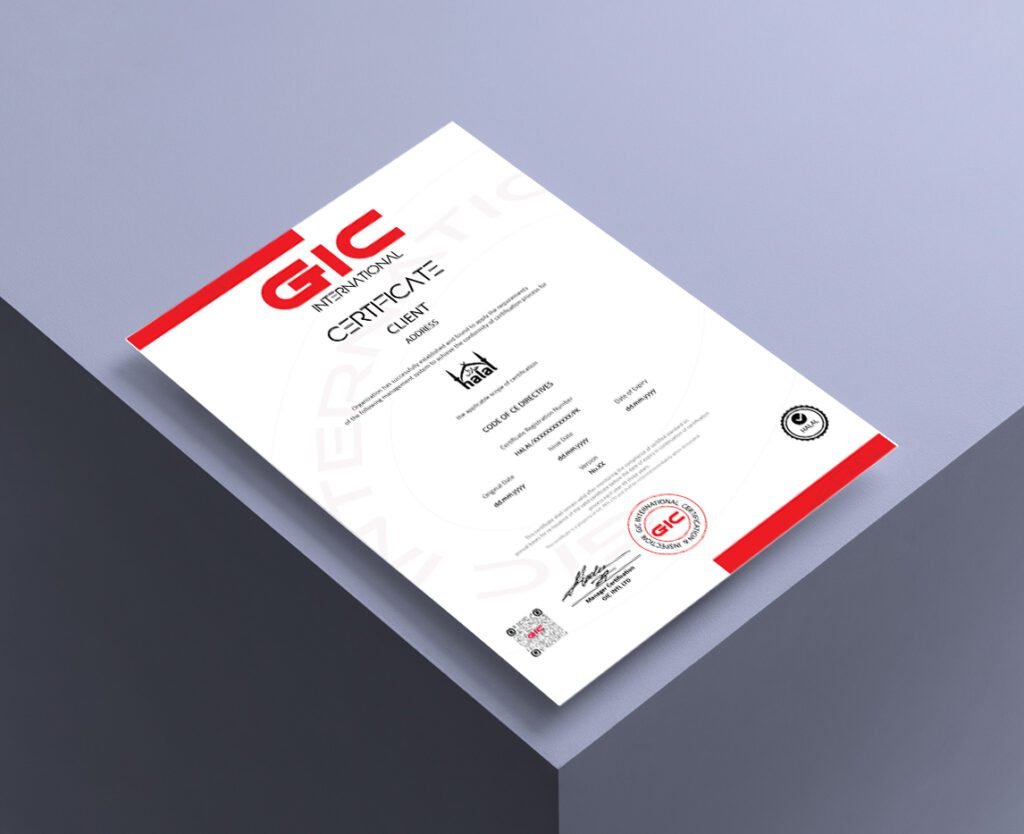
Halal Certification offers a structured framework for organizations to ensure their products are permissible for Muslim consumers. Issued by accredited bodies like GIC International, the certification sets strict requirements covering sourcing, preparation, hygiene, and production processes. Companies achieving this certification can effectively identify and control every aspect of their supply chain, ensuring product integrity from raw materials to the finished goods.
Halal Certification forms part of a broader ethical consumption system that emphasizes cleanliness, safety, and moral responsibility. Its primary goal is to provide organizations with a trusted and verifiable system to meet the dietary and lifestyle needs of over 1.8 billion Muslims worldwide. By obtaining Halal Certification, companies can gain enhanced market access and demonstrate a strong commitment to inclusivity, quality, and ethical practices.
Key Elements of the Halal Certification Process
GIC International’s Halal Certification encompasses several essential elements that organizations must address to achieve full compliance:
- Halal Policy and Management System: Organizations are required to establish a clear Halal policy along with a structured management system to implement it. This framework forms the foundation for all Halal control measures and staff training initiatives.
- Raw Material and Ingredient Assessment: Every raw material, ingredient, and processing aid must be thoroughly evaluated for Halal compliance. This includes supplier verification and approval processes to ensure that no non-Halal or questionable substances are used.
- Production Process and Facility Requirements: The entire production process must prevent cross-contamination with non-Halal items. This involves dedicated equipment, strict cleaning protocols, and regular facility audits to ensure adherence to Halal standards.
- Packaging, Labeling, and Storage: Products must be packaged and stored using Halal-compliant materials and methods, kept separate from non-Halal items. Accurate labeling is essential to maintain consumer trust and transparency.
- Internal Audits and Management Review: Organizations must carry out regular internal audits to maintain ongoing compliance. Additionally, top management must periodically review the system to ensure its effectiveness and foster continuous improvement.
Benefits of Halal Certification
Challenges in Obtaining Halal Certification
Despite its advantages, achieving Halal Certification can pose certain challenges. A frequent hurdle is the complexity of modern supply chains, where ingredients may originate from multiple countries. To overcome this, GIC International offers expert guidance on supplier evaluation and ingredient verification.
Another challenge involves the initial investment required for process modifications and staff training. While this requires resources upfront, it results in enhanced operational standards and access to significant market opportunities. GIC International assists organizations throughout this transition, providing clear guidance and practical solutions to ensure smooth and effective certification.
Halal Certification and Continuous Integrity
Real-World Applications of Halal Certification
Halal Certification extends far beyond the food and beverage sector, offering value across a wide range of industries.
Food & Beverage Manufacturers use it to ensure their products meet the requirements for Muslim consumers.
Pharmaceutical and Cosmetic Companies can certify their products to guarantee that all ingredients and manufacturing processes comply with Halal standards.
Logistics and Packaging Providers can achieve certification for their services, maintaining the integrity of Halal products throughout the supply chain.
Small and medium-sized enterprises (SMEs) can gain significant advantages from Halal Certification. Its scalable framework can be tailored to the organization’s size and operational needs, enabling SMEs to build a global presence, stand out in competitive markets, and access new export opportunities.
Halal Certification is a strategic asset for any organization seeking success in the global marketplace. Partnering with GIC International allows companies to navigate the certification process seamlessly, ensure product integrity, and foster trust among a large and growing consumer base. While implementation requires commitment, the long-term commercial and reputational benefits are substantial. With dedication to quality and ethical practices, organizations can achieve sustainable success. Whether a large enterprise or an ambitious SME, adopting Halal Certification with GIC International can expand market reach and drive global excellence.