
ISO 9001 Quality Management System (QMS)
In today’s highly competitive global marketplace, organizations must consistently deliver high-quality products and services while exceeding customer expectations to achieve long-term success. ISO 9001 is the world’s most widely recognized international standard for Quality Management Systems (QMS), offering a proven framework that helps organizations ensure their products and services continually meet customer needs and regulatory requirements. By adopting ISO 9001, companies demonstrate a strong and ongoing commitment to quality, leading to improved customer satisfaction, streamlined operational processes, and sustainable business growth.
“Discover how ISO 9001 can transform quality management with GIC International. Take the next step toward gaining this strategic advantage and achieve ISO 9001 certification today.”
Understanding ISO 9001
ISO 9001 Certification offers a comprehensive framework that enables organizations to establish, implement, maintain, and continuously improve an effective Quality Management System (QMS). Developed by the International Organization for Standardization (ISO), the standard defines the essential requirements for a QMS and is founded on a process-based management approach. By adopting ISO 9001, GIC International can systematically control and optimize its processes, minimize errors, and improve operational efficiency, resulting in greater customer confidence and long-term loyalty.
As the foundation of the ISO 9000 family of standards, the main objective of ISO 9001 Certification is to help organizations consistently deliver products and services that meet customer expectations as well as applicable statutory and regulatory requirements. For organizations such as GIC International, this means embedding quality across every stage of operations—from initial client engagement through to final service delivery—ensuring consistent excellence and reliability.
Key Elements of ISO 9001
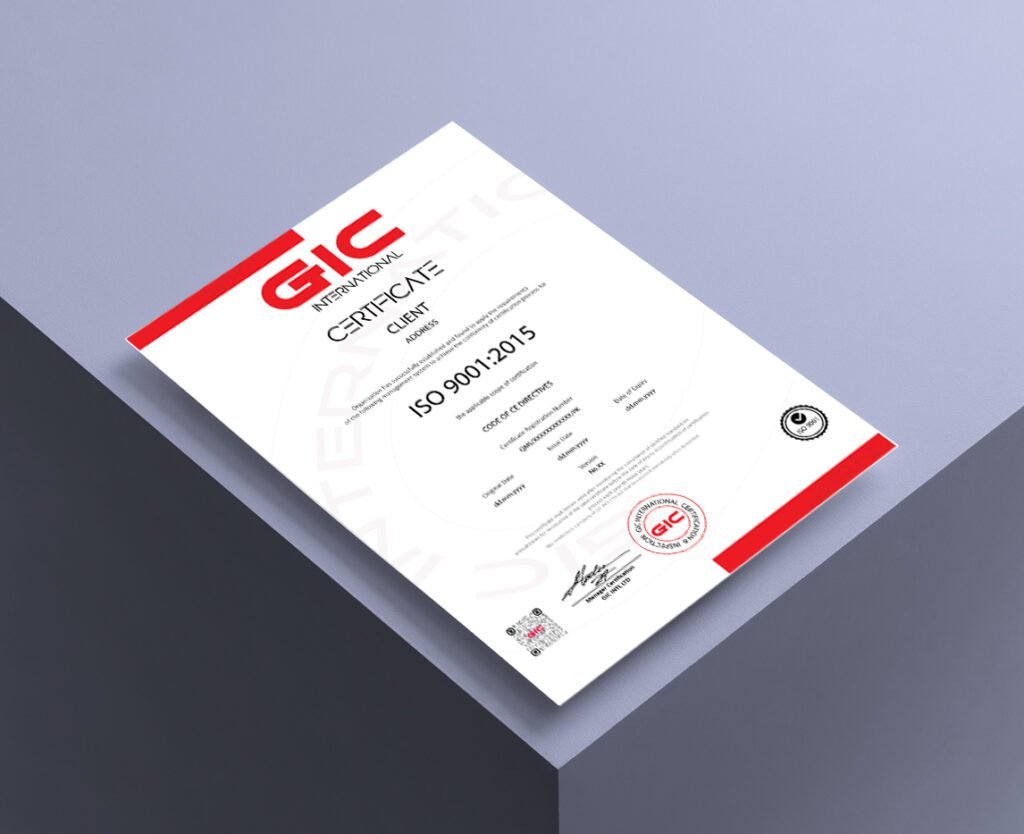
ISO 9001 Certification is built around a set of high-level clauses that collectively establish the foundation of an effective Quality Management System (QMS). These key elements include:
- Context of the Organization: GIC International is required to identify internal and external factors, along with the needs and expectations of interested parties such as clients, regulators, and partners, that may influence its strategic direction and quality goals.
- Leadership: Top management at GIC International must show clear leadership and commitment by embedding the QMS into core business processes, defining a quality policy, and assigning and communicating roles and responsibilities throughout the organization.
- Planning: This clause focuses on identifying risks and opportunities that may impact product and service conformity. GIC International establishes measurable quality objectives across relevant functions and levels to support continual improvement.
- Support: The organization must ensure the availability of adequate resources, maintain competent personnel, and promote awareness of the quality policy. Effective control of documented information is also required to support consistent process operations.
- Operation: As the heart of the QMS, this element covers the planning, design, and control of processes involved in delivering products and services, ensuring they are carried out under controlled and reliable conditions.
- Performance Evaluation: GIC International monitors, measures, and evaluates process performance and customer satisfaction through internal audits, data analysis, and regular management reviews of the QMS.
- Improvement: Continual improvement is a central principle of ISO 9001. GIC International addresses nonconformities, implements corrective actions to prevent recurrence, and consistently enhances overall QMS effectiveness and performance.
Benefits of ISO 9001 for GIC International
- Enhances Customer Satisfaction
Consistently ensures that GIC International’s services align with and fulfill customer requirements.
Strengthens client relationships and encourages long-term loyalty through dependable and consistent service delivery. - Improves Operational Efficiency and Cost Control
Optimizes workflows, removes inefficiencies, and reduces errors and unnecessary waste.
Results in measurable cost savings and more effective use of organizational resources. - Strengthens Competitive Advantage and Brand Reputation
ISO 9001 Certification is a globally recognized symbol of quality excellence.
Positions GIC International as a trusted and credible organization, increasing its appeal to prospective clients and strategic partners.
Challenges in Implementing ISO 9001
Implementing ISO 9001 can involve certain challenges for organizations. One of the most common obstacles is cultural resistance, as employees may be comfortable with established ways of working. This can be addressed through strong leadership, transparent communication, and effective training programs that clearly highlight both individual and organizational benefits.
Another challenge is the initial time and resource commitment required to document processes and implement the system. However, this effort should be seen as a strategic investment. Over time, the improvements in operational efficiency, customer retention, and brand reputation significantly outweigh the upfront costs, while the structured ISO 9001 framework helps reduce reactive problem-solving and inefficiencies.
ISO 9001 and Continuous Improvement
Continuous improvement is the driving force behind the ISO 9001 standard, ensuring that GIC International not only maintains quality benchmarks but continually enhances them. This approach focuses on setting progressively higher quality objectives, analyzing audit findings and performance data, and proactively identifying opportunities for improvement.
The Plan-Do-Check-Act (PDCA) cycle is integrated throughout ISO 9001, offering a structured and repeatable methodology for process management and continual improvement. By embedding this culture into its operations, GIC International can respond effectively to market dynamics and evolving customer expectations with confidence and agility.