


GMP – Good Manufacturing Practice
In today’s competitive global market, especially in sectors like pharmaceuticals, food, and medical devices, product quality and safety are paramount. GMP (Good Manufacturing Practice) is an internationally recognized system that ensures products are consistently manufactured and controlled according to strict quality standards. For organizations like GIC International, which operate in global trade and certification, GMP Certification serves as a vital assurance that the products you source, distribute, or certify are safe, effective, and of superior quality. Following GMP not only reduces risks but also fosters strong trust with clients and regulatory authorities worldwide.
“Learn more about GMP – a fundamental quality system. To explore certification and advisory services, you can partner with GIC International to turn your organizational goals into reality by contacting us.”
Understanding GMP
GMP provides a structured framework for manufacturers to consistently produce and control products in accordance with quality standards suited to their intended use. Rather than relying solely on end-product testing, GMP adopts a proactive, risk-based approach, embedding quality into every stage of the manufacturing process—from raw materials, facilities, and equipment to staff training and hygiene. GIC International emphasizes that GMP Certification addresses all aspects of production, minimizing risks that cannot be detected through final product testing alone.
GMP is not a single standard but a collection of core principles codified in regulations by authorities such as the US FDA and the European Medicines Agency, and detailed in guidelines like WHO GMP and ICH Q7. Its primary goal is to prevent contamination, mix-ups, deviations, and errors, ensuring that consumers receive products that are safe, pure, and meet their intended quality specifications.
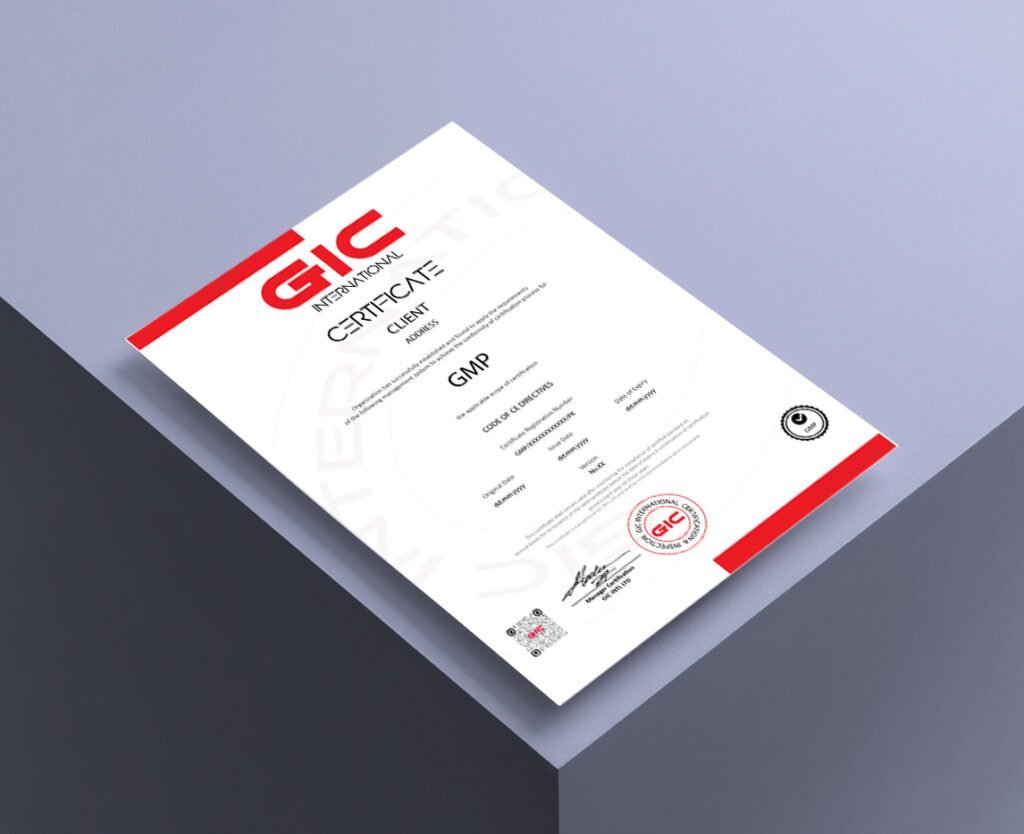
Key Elements of GMP
GMP consists of several essential components, commonly referred to as the “Five P’s,” which organizations must meticulously implement:
- People (Personnel): All staff must possess the necessary qualifications, training, and clearly defined responsibilities to perform their roles effectively. This includes maintaining strict personal hygiene and understanding the critical importance of GMP procedures.
- Premises and Equipment: Manufacturing facilities must be designed, constructed, and maintained to support proper cleaning, prevent contamination, and enable a logical workflow. Equipment should be regularly calibrated, cleaned, and maintained to operate correctly.
- Processes (Procedures): Every manufacturing process must be clearly defined, systematically evaluated, and validated to consistently produce products that meet quality standards. Processes must be documented in Standard Operating Procedures (SOPs) and strictly followed.
- Products (Materials): Strong control must be exercised over all raw materials, intermediates, and finished products. This includes setting clear specifications, performing identity and quality testing, and ensuring proper storage and handling.
- Procedures (Documentation & Records): Comprehensive documentation is crucial, providing a complete history of each batch from raw material receipt to final distribution. Accurate records ensure traceability and are vital for investigating and correcting any deviations.
Benefits of GMP
Ensures Product Quality and Safety
Systematically prevents errors, contamination, and deviations.
Guarantees that every product batch meets its predefined specifications, safeguarding end-user health.
Facilitates International Market Access
Compliance with GMP is a key requirement for accessing regulated markets such as the US, EU, and others.
A GMP certificate from a reputable body like GIC International acts as a gateway to global trade.
Reduces Risks and Costs
Minimizes the likelihood of product recalls, rejections, and regulatory penalties, which can be expensive and harm reputation.
Fosters a culture of quality, driving operational efficiency and reducing waste.
Challenges in Implementing GMP
Despite its evident advantages, implementing a comprehensive GMP Certification system can pose challenges. A major obstacle is the upfront investment required for facility upgrades, equipment, and staff training. GIC International supports organizations in developing a phased implementation approach to manage these requirements effectively.
Another frequent challenge is cultural resistance and the strict discipline needed to consistently follow procedures and maintain accurate documentation. Addressing this requires strong leadership commitment, ongoing training, and fostering a transparent quality culture where every employee takes ownership of product quality.
GMP and Continuous Improvement
GMP is not a one-off accomplishment but a framework for continuous improvement. As regulations evolve, manufacturers must consistently evaluate and enhance their quality systems. Integrating Quality Risk Management (QRM) is essential in modern GMP, enabling organizations to proactively identify and control potential quality issues.
The Plan-Do-Check-Act (PDCA) cycle serves as a key tool for driving this ongoing improvement, ensuring processes are routinely reviewed, audited, and optimized to achieve higher performance and regulatory compliance.
Real-World Applications of GMP
GMP is essential across a wide range of industries:
Pharmaceuticals: Ensures that every tablet, vial, or capsule meets the correct identity, strength, and purity standards, while remaining free from contamination.
Medical Devices: Guarantees that devices—from simple syringes to complex implants—are safe, reliable, and perform as intended.
Food and Beverages: Implemented through Good Hygiene Practices (GHP) and HACCP, it prevents foodborne illnesses and ensures overall food safety.
Cosmetics: Ensures products are safe for consumer use and manufactured under hygienic conditions.
GMP Certification serves as the cornerstone of manufacturing excellence in quality-critical industries. By implementing and certifying against GMP standards, companies can guarantee unmatched product quality, comply with international regulations, and gain a strong competitive advantage. While achieving full compliance requires commitment and resources, the long-term benefits—enhanced market trust, reduced risk, and operational excellence—are substantial. GIC International is your trusted partner in this journey, offering expert guidance and certification services to help your organization achieve and sustain GMP compliance, paving the way for sustainable quality and global success.